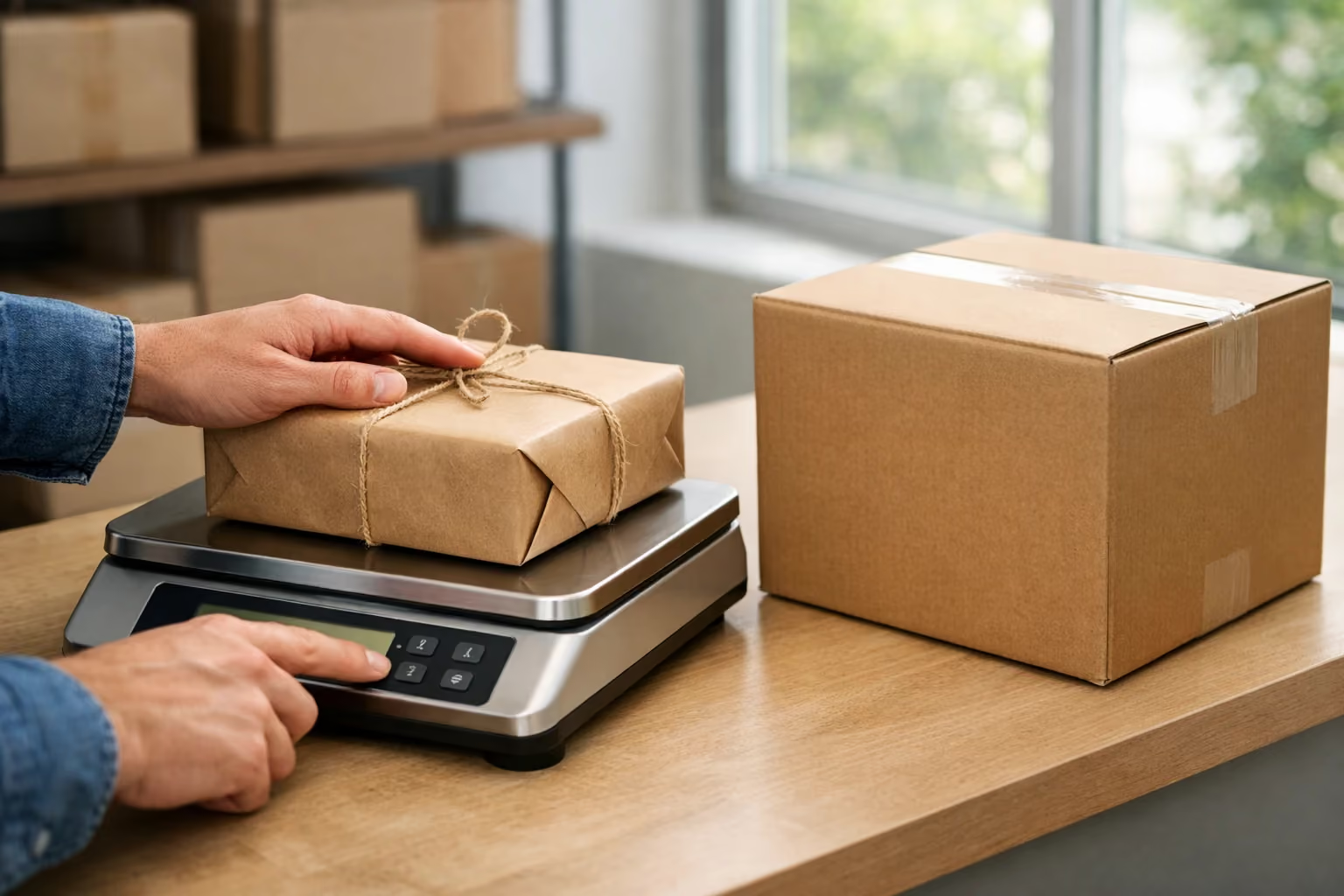

How the Billable Weight Calculator Works
FedEx's page on dimensional weight, checked in October 2026, explains the method:
- Formula. Multiply length by width by height, in inches, then divide by 139.
- Rounding. Round each dimension to the nearest whole inch before multiplying.
- Billable weight. FedEx charges whichever is greater, the dimensional weight or the actual weight.
Here is a worked example, which is simple arithmetic and not a Unival rate. A box measuring 16 by 12 by 8 inches has 1,536 cubic inches. Divided by 139, that is about 11.05. If the box weighs 4 lbs, the dimensional weight is the greater figure, so it applies. FedEx's page does not state how the final figure is rounded, so confirm that with your carrier or provider.
Right-sizing your box is the simplest way to lower dimensional weight. Our guide explains dimensional weight in more detail.
How the Rate Comparison Calculator Works
This calculator does not know any provider's rates. It compares two cost-per-parcel figures that you enter, using this formula:
- Difference per parcel. Current cost minus quoted cost.
- Monthly difference. Difference per parcel times parcels per month.
- Yearly difference. Monthly difference times 12.
For example, a difference of $1 per parcel on 500 parcels a month adds up to $6,000 a year. That is arithmetic, not a promise of savings. Use the full cost per parcel on both sides, including extra charges, so the comparison is fair.
What Goes Into a Shipping Rate Estimate
FedEx's guide to estimating shipping costs, checked in October 2026, lists the inputs its own calculator uses:
- Origin and destination. ZIP or postal codes set the distance and zone.
- Residential delivery. The calculator asks whether the destination is a home.
- Size and weight. The greater of dimensional weight and actual weight applies.
- Service choice. FedEx says this has the biggest impact on the estimate.
- Ship date. Holiday volumes and network capacity can change prices.
- Surcharges and fees. Fuel, special handling and pickup or delivery conditions can add to the cost.
For peak-season surcharges, see our bulk shipping discounts page.
Why Calculator Results Are Estimates
FedEx says its online calculator gives an estimate and not a final charge, and that actual charges can differ if weight, dimensions or other inputs change before shipping. It also says account holders should sign in so the estimate reflects applicable discounts.
No public calculator can know a rate agreed for your business. That is why we quote from your parcels, destinations, services and volume. We do not publish a fixed discount, so any figure you see on this page comes from numbers you entered.
Where Unival Fits In
Unival offers volume-based FedEx pricing for businesses that ship regularly. Our quote form asks for your name, email, service, ship-from and ship-to locations, weight in lbs or kg, and length, width and height in inches. It also asks for an insurance amount. The service options are Overnight, 2-Day, Ground and International.
Your billable weight result helps you fill in the form accurately. For more on how volume affects pricing, see our pages on small business shipping rates, discounted FedEx rates and discounted shipping.
- Rates are quoted through our quote form.
- Selling online? See our ecommerce shipping rates.
FedEx is a trademark of its owner. It is named here to identify the carrier and methods described, as checked in October 2026. Unival is not FedEx, and this page does not imply endorsement by FedEx.