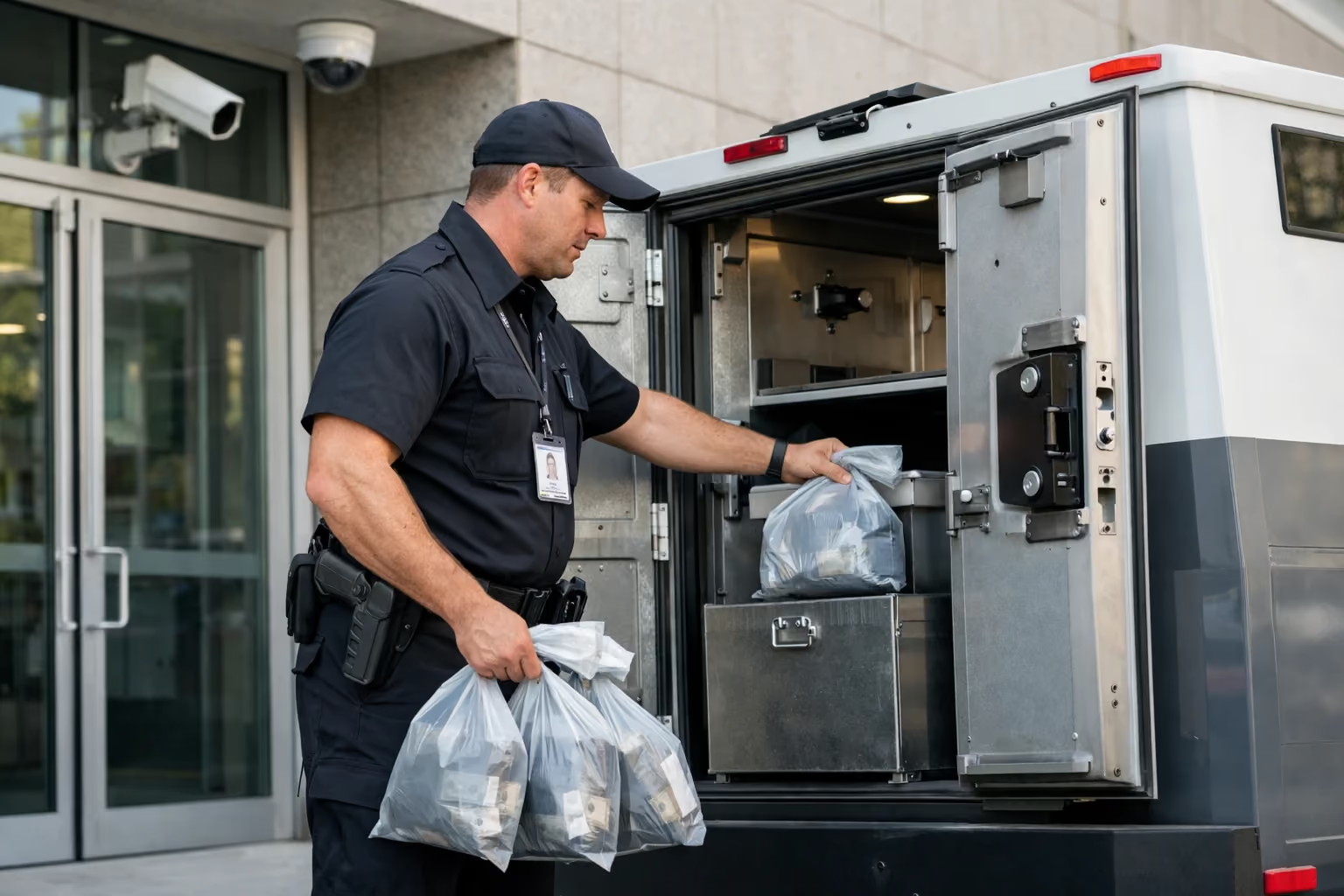

Why Cash Needs More Than a Standard Parcel Label
Cash in transit means moving cash between locations with a documented chain of custody. Standard parcel services are not built for it: carriers often restrict, refuse or heavily limit what they will pay for currency, and a loss leaves a gap that is hard to close afterwards.
Insurance matters, but so does proof. Full-value insurance covers the declared amount of the shipment, up to $150,000 with Unival, and a recorded count, a seal number and a log of every handover show exactly what was sent and who held it. Read more on our cash industry page, or see our overview of insured high-value shipping.
Cash can be lost in two ways: it can go missing, or its amount can be disputed. A process that is fixed in advance answers both.
How the Chain of Custody Works
The chain of custody is the record of who held the cash at every moment. The table shows what happens at each stage and what record it creates.
| Stage | What happens | Record created |
|---|---|---|
| Count and seal | Cash is counted and sealed in tamper-evident packaging | Count and seal number |
| Pickup | Handover checked against identity | Name and time of handover |
| Transport | Shipment tracked, with insurance in place | Tracking scans |
| Delivery | Recipient signs and checks the seal and count | Signature and time of delivery |
| Afterwards | Proof of delivery stored with the shipment | Complete shipment record |
Record the count and the seal number before pickup, compare both on delivery and report any difference at once.
Security Layers for Cash and High-Value Assets
Sealed packaging and identity checks are the base of every cash shipment. Where a shipment calls for more, armored transport, controlled handoffs, door-to-door oversight and security personnel can be arranged, and the right level depends on the amount, the route and the timing.
Availability depends on the route, so tell us the pickup address and the destination when you request a quote. Read more about our secure transport services and secure transportation.
Compliance and Record-Keeping
Moving cash comes with reporting duties, and the sender and the recipient remain responsible for their own. Cash moved into or out of the United States is subject to reporting rules: US rules require a report when more than $10,000 in currency is shipped across the border. Other reporting obligations can apply to cash transactions above set thresholds, depending on the business and the transaction.
Describe every shipment accurately, and keep the records that show where the cash came from and where it is going. Splitting an amount into smaller parts to avoid a reporting requirement is itself unlawful. Confirm the requirements with your compliance adviser, and contact us before shipping cash internationally.
What to Ask Any Cash Transport Provider
Before you hand over cash, ask four questions of any provider, including us:
- Coverage: is the full declared amount insured?
- Custody: who holds the shipment at each step, and is each handover recorded?
- Identity: is every handover checked against identity?
- Support: can you reach a person while the shipment moves?
Cash in Transit by City
Cash movements differ from one market to the next. These pages have local detail:
Large Amounts and the Cost of Cash Shipping
Unival insures cash shipments for their full declared value, up to $150,000. If the amount is higher, contact us before you ship.
The price has two parts: the shipping and the insurance on the declared amount. The amount, the route, how often you ship and the handover requirements all change the total. See our guide to shipping insurance cost, and get a quote with the amount, the pickup location, the destination and how often you ship.
How to Prepare a Cash Shipment
Good preparation makes every handover smoother. Before the shipment moves, check the following:
- Count the cash and record the total before sealing.
- Seal it in tamper-evident packaging and record the seal number.
- Agree the named people authorized to hand over and receive the shipment, and have identification ready.
- Keep the paperwork that describes the shipment, its source and its purpose.
- Agree the schedule in advance for regular movements, and give early notice before busy periods.
- Compare the seal and the count on delivery and report any difference at once.