Insured Fine Art Shipping for Galleries, Dealers & Collectors

Ship paintings, prints, sculpture, antiques and collectibles with full-value insurance, careful handling and signed delivery. Specialized handling and protected transport for pieces that cannot be replaced.

  • Full-value insurance up to $150,000
  • Careful, documented handling
  • Protected transport for irreplaceable pieces
  • Signature delivery, tracked end to end

Get shipping quote

Cancel
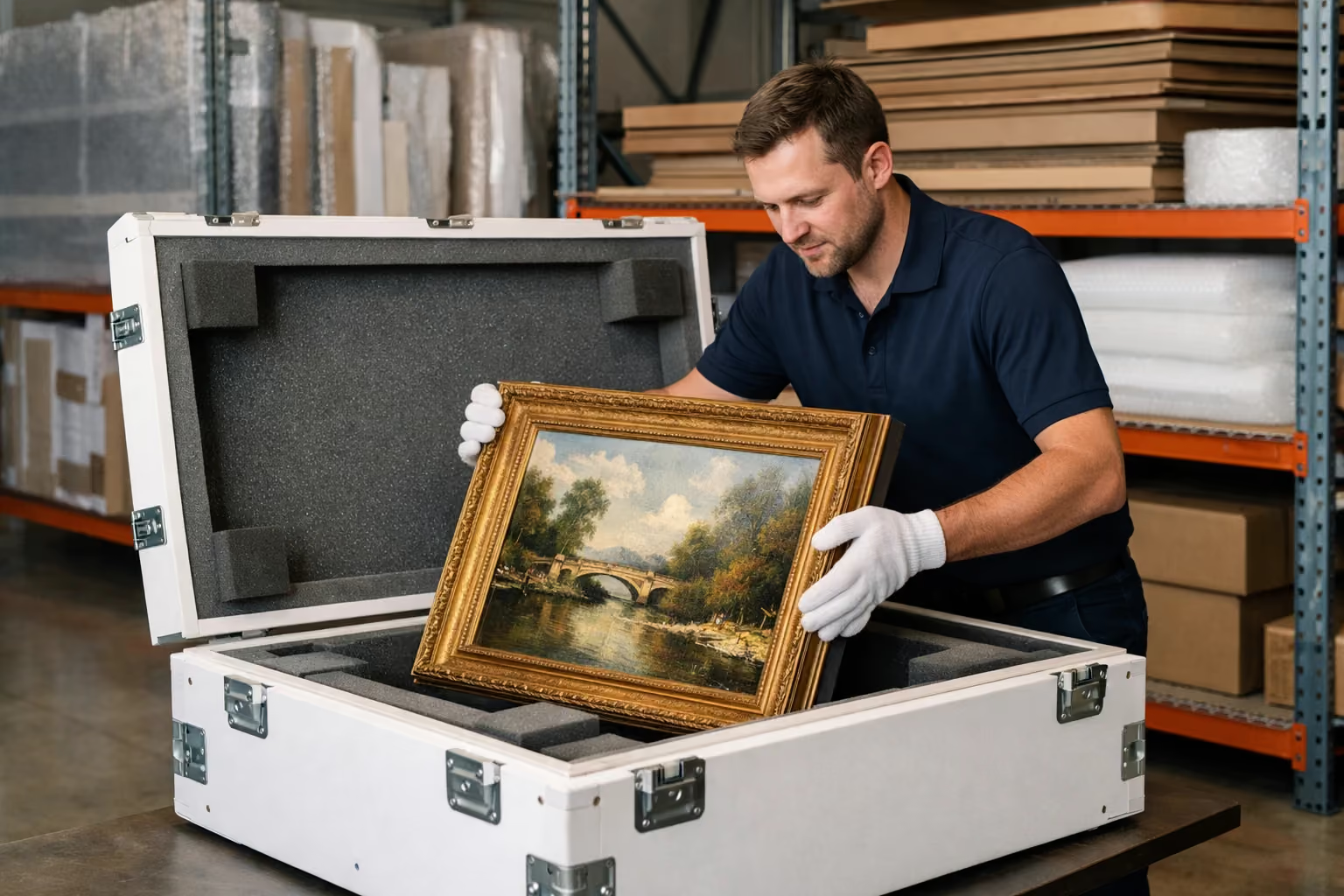
Art handler packing a framed painting securely for shipping in a crateUnival Logistics

Who Can Ship Fine Art With Unival?

Artwork is hard to replace and hard to value after a loss, and a standard carrier label rarely reflects what a piece is worth. These are the senders who rely on insured shipping most.

  • Galleries

    Works travel from gallery to client, to fairs and back to storage throughout the year. Full-value insurance and signed delivery protect each sale, loan and consignment.

  • Art dealers and advisors

    Dealers and advisors move works between sellers, buyers and storage, often across states and borders. A documented record of each handover keeps responsibility clear.

  • Auction houses and consignors

    Consigned lots move to previews, sales and buyers, with several parties involved at every step. Insured, tracked shipping protects the lot and the record of who held it.

  • Private collectors

    Selling, lending or relocating works from a collection means shipping pieces that cannot be replaced. Coverage for the declared value protects what a standard carrier limit does not.

  • Artists and studios

    Finished works sent to galleries, buyers and exhibitions carry months of effort in a single box. Insured, tracked shipping protects the piece and records its delivery.

  • Antique and collectibles dealers

    Antiques, ceramics, silver and rare objects are fragile and often hard to value after a loss. Insurance for the declared value and good documentation make a claim straightforward.

  • Interior designers

    Designers source works for clients and move them between studios, showrooms and homes. Insured shipping protects the work while it is in transit.

  • Families and estate executors

    Settling an estate often means sending paintings and objects to an appraiser, a dealer or an auction house. Insured, documented shipping protects pieces that cannot be replaced.

How Insured Fine Art Shipping Works - Step by Step

  1. Get a quote

    Tell us what you are shipping, its dimensions and weight, the declared value, where it will be collected and where it is going. We confirm the coverage and price before the work moves.

  2. Document and pack

    Photograph the work, including the back, signatures and labels, and note its condition. Pack it so it cannot shift inside the box, then seal it.

  3. Arrange pickup

    When you request a quote, we arrange collection from your gallery, studio or home and take the shipment into our secure process.

  4. Secure transport and tracking

    The shipment travels with full-value insurance and is tracked from pickup until it is delivered.

  5. Signed delivery and inspection

    The recipient signs for the work and should inspect it on arrival, noting any damage before signing. The proof of delivery is stored with the shipment record.

Why Artwork Needs More Than Standard Carrier Coverage

Carriers publish their own caps for items of extraordinary value, and they often restrict or exclude artwork and antiques. Their basic liability is usually a small fraction of what a work is worth, and declared value on a label is a limit of liability, not insurance.

With full-value insurance, the declared value of the shipment is covered, up to $150,000 with Unival. Read more on our arts and collectibles industry page, or see our overview of insured high-value shipping.

Documentation does much of the work with art. An invoice, appraisal or provenance record, plus photographs of the condition before shipping, make the declared value credible and a claim easier to resolve.

What to Prepare for Each Type of Artwork

Different works carry different risks. This table shows what to focus on before you seal the package.

Type of workMain riskWhat to prepare
Framed paintings and works on paperGlass breakage, frame and corner damagePhotos of front, back and frame, protected corners and glazing
Unframed canvasesSurface scuffs, creasingProtective wrap, rigid support, photos of the surface
Prints and photographsBending, moistureFlat or tube packing, acid-free wrap, edition and signature records
Small sculpture and ceramicsBreakage, loose partsPadding on all sides, no movement in the box, note of existing damage
Antiques and collectiblesFragility, hard to valueAppraisal or invoice, detailed photos, itemized list

Photographs and a written condition note taken before shipping are the best evidence if a claim is ever needed.

Fine Art Shipping by City

Each art market ships differently. These pages have local detail on galleries, auction houses and fairs:

Fairs, Auctions and Exhibition Shipments

Works that travel to a fair, an auction preview or an exhibition make several journeys. Ship each leg, to the event and back, as a separate insured shipment, each with its own itemized list and declared value, so nothing is left uncovered on the way home.

Photograph each work before it leaves and again when it returns. Any difference is easier to resolve when both sets of photographs exist, and the busiest fair weeks fill up quickly, so plan ahead.

Size, Weight and Cost of Insured Art Shipping

Insured shipping works best for artwork that can be packed to carrier size and weight limits, such as framed works, paintings, prints, photographs, small sculpture, ceramics and collectibles. Furniture, very large, oversized or exceptionally fragile pieces may need specialist crating or handling, so contact us before you ship.

Carriers price by dimensions as well as weight, so a large, light framed work can cost more than expected. Read our guide to dimensional weight in shipping and see shipping insurance cost for how each factor works. Get a quote with the type of work, its size, declared value, pickup location and destination.

Secure Transport for High-Value Art

The most valuable and irreplaceable works need more than insurance. Protected transport, controlled handoffs and security personnel can be arranged for shipments that call for them, and the right level depends on the value, the route and the timing.

Read more about our secure transport services and secure transportation.

Shipping Art Internationally

International art shipments need accurate customs paperwork, including a commercial invoice with the correct value and a clear description of each work. Some countries restrict the export of antiques and cultural property, so check the rules before you ship.

Works sent to a fair abroad and brought back may qualify for temporary entry, and an ATA Carnet can simplify this in participating countries. Some destinations are restricted under US export and sanctions rules, so tell us the destination when you request a quote.

How to Document and Pack Artwork for Shipping

Good records prevent most claim disputes. Before you ship, check the following:

  1. Keep the invoice, appraisal or provenance record for the work.
  2. Photograph the front, back, frame, signatures and any existing damage.
  3. Write a short condition note and keep a copy.
  4. Protect corners, glass and surfaces, and fill the box so the work cannot move.
  5. Use a plain outer box with no mention of art or the contents.
  6. Declare the full, accurate value and make sure the recipient can sign for the delivery.

Frequently Asked Questions

Unival insures shipments for their full declared value, up to $150,000. If your work is worth more, contact us before you ship.

Yes. Paintings, prints, photographs and other works that can be safely packed to carrier size can be shipped with full-value insurance.

Yes. Antiques, ceramics, silver and other collectibles can be shipped with full-value insurance, provided they can be packed securely. Document their condition before shipping.

Contact us before you ship. Oversized or exceptionally fragile works may need specialist handling, and we will confirm what is possible for your piece.

You need proof of value, such as an invoice, appraisal or provenance record. It supports your declared value and makes any claim easier to resolve.

No. Declared value on a carrier label is a limit on the carrier's liability, and carriers cap it for artwork and antiques. Full-value insurance covers the declared value of the shipment itself.

Yes. Ship each leg, to the auction house or fair and back, as a separate insured shipment, each with its own itemized list and declared value.

Note the damage on the delivery receipt before signing, photograph the packaging and the work, and contact us right away. Keep all packaging and records, since they support a claim.

Yes. International shipments need accurate customs paperwork that matches the declared value, and some countries restrict the export of antiques and cultural property, so check the rules before you ship.

Collection from your location is arranged when you request a quote. Tell us the pickup address and we will confirm whether we can collect from it. Every shipment is tracked from pickup to signature.

Send us the type of work, its size, the declared value, the pickup location and the destination through the quote form , and we will confirm the coverage and price before anything ships.

When the shipment matters, every detail matters.

Tell us what you're shipping and we'll build the right combination of secure transport, full-value insurance, and protection.
Get a quote