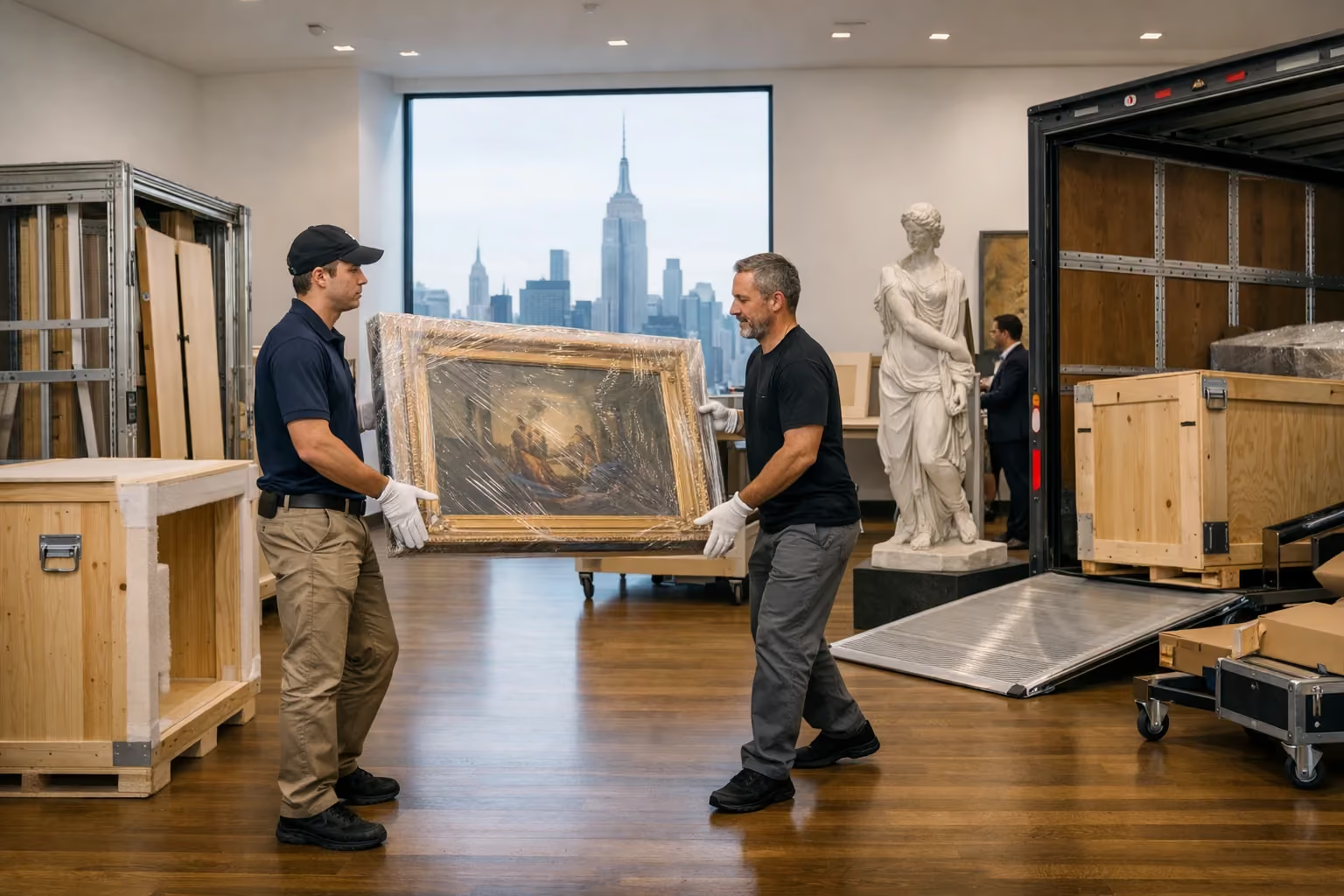

Why Artwork Needs More Than Standard Carrier Coverage
Artwork is hard to replace and hard to value. Carriers usually limit their liability for artwork and antiques well below market value, and they often restrict or exclude certain items, so a standard label can leave a significant gap.
A declared value is not the same thing as insurance. It states what you say the work is worth, but the carrier's own limit can still decide what is paid. With full-value insurance, the declared value of the shipment is covered, up to $150,000 with Unival.
In a market where works pass between galleries, auction houses and collectors, documentation does much of the work. An invoice, appraisal or provenance record, plus photographs of the condition before shipping, make the declared value credible and a claim easier to resolve.
What to Prepare for Each Type of Art Shipment
Different shipments carry different risks. This table shows what to focus on for each.
| Shipment | Main risk | What to prepare |
|---|---|---|
| Sale to a collector | Disputes over condition | Condition photos, invoice, signed delivery |
| Consignment to a gallery or auction house | Ownership and value disputes | Consignment agreement, declared value matching it |
| Works for fairs and exhibitions | Several legs, repeated handling | Itemized list, photos before and after each leg |
| Works on paper, prints and photographs | Bending, moisture | Flat or tube packing, acid-free wrap, edition numbers |
| Small sculpture, ceramics and antiques | Breakage, loose parts | Padding on all sides, note of existing damage |
Photographs and a written condition note taken before shipping are the best evidence if a claim is ever needed.
Shipping Art From New York's Galleries, Auction Houses and Fairs
New York's art trade is spread across gallery districts in Chelsea, the Lower East Side, the Upper East Side and Hudson Yards, and across the major auction houses, including Christie's, Sotheby's, Phillips and Bonhams, which hold their main sales in the city.
Shipping activity peaks around New York Art Week each May, when fairs such as Frieze New York at The Shed and TEFAF New York at the Park Avenue Armory bring works in and out of the city. Insured, tracked shipping suits the single works and small groups of works that travel in this way.
Typical shipments from the New York art trade include:
- Works sold to collectors in other cities and countries
- Consignments sent to galleries, advisors and auction houses
- Works returned after fairs and exhibitions
- Antiques and collectibles sold to dealers
Unival is headquartered in Los Angeles and insures and tracks shipments to and from New York. Read more about our secure transportation or see our overview of insured shipping in New York. If you ship to or from the West Coast, see insured fine art shipping in Los Angeles.
What Size and Type of Artwork Can You Ship?
Insured shipping works best for artwork that can be packed to carrier size and weight limits, such as framed works, paintings, prints, photographs, small sculpture, ceramics and collectibles.
Very large, oversized or exceptionally fragile pieces may need specialist crating or handling. Contact us before you ship so we can confirm that your work is suitable and what to expect.
What Affects the Cost of Insured Art Shipping From New York?
The price has two parts: the shipping and the insurance on the declared value. These factors change the total:
- Declared value: the higher the value, the more coverage is needed.
- Size and weight: carriers price by dimensions as well as weight, so a large, light framed work can cost more than expected.
- Destination and speed: local, domestic and international deliveries are priced differently.
- Handling requirements: signature rules, packaging and pickup arrangements are part of the service.
We quote each shipment before it moves. Get a quote with the type of work, its size, declared value, pickup location and destination.
How to Pack and Document Artwork for Shipping
Good records prevent most claim disputes. Before you ship, check the following:
- Keep the invoice, appraisal or provenance record for the work.
- Photograph the front, back, frame, signatures and any existing damage.
- Write a short condition note and keep a copy.
- Protect corners, glass and surfaces, and fill the box so the work cannot move.
- Use a plain outer box with no mention of art or the contents.
- Declare the full, accurate value and make sure the recipient can sign for the delivery.