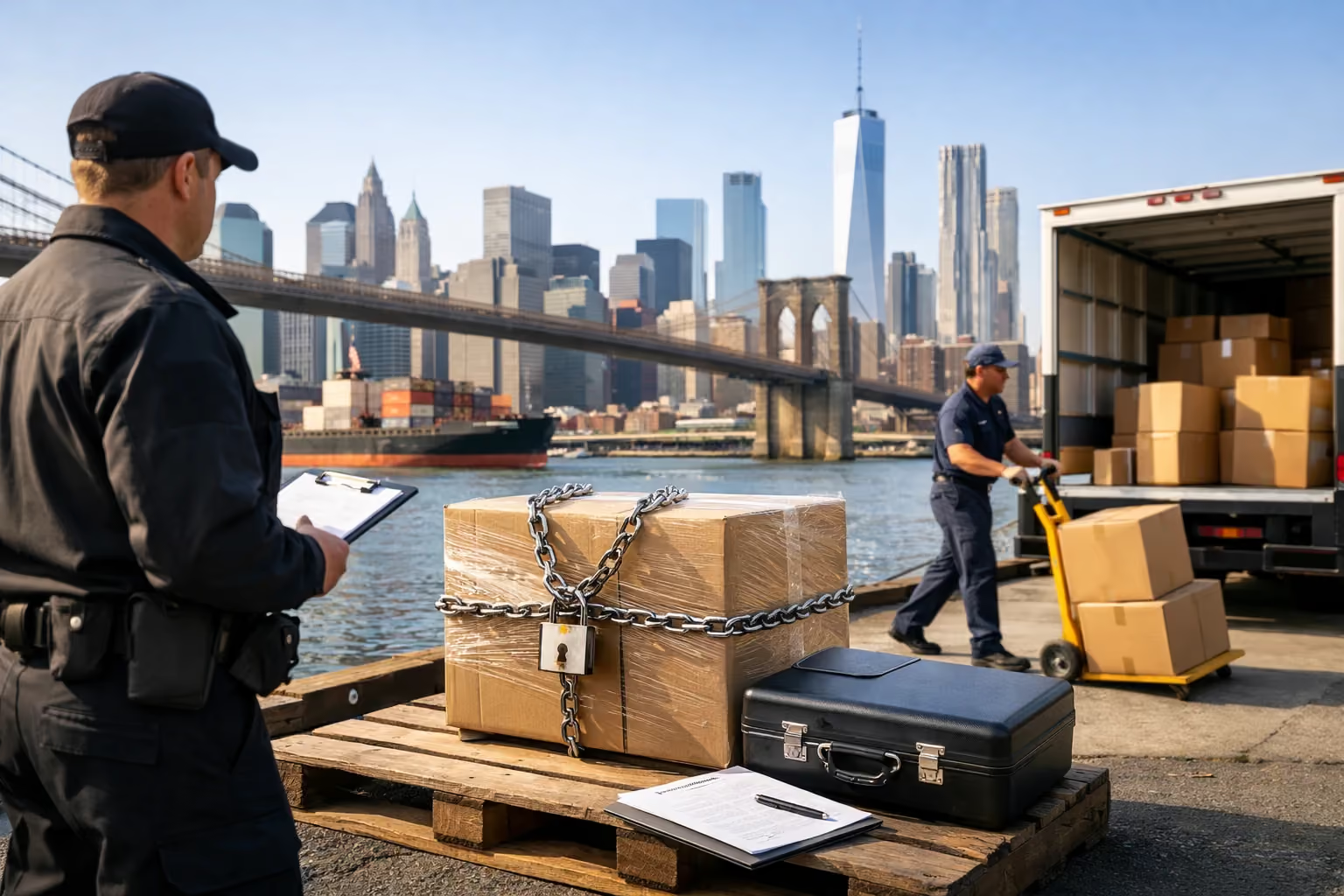

Why Standard Carrier Coverage Is Not Enough for Valuables
Standard carrier liability is built for ordinary parcels. For high-value items it often falls far short: many carriers apply special limits or exclusions to jewelry, precious metals, artwork and other items of extraordinary value, and their basic liability is usually a small fraction of what such a shipment is worth.
Declared value is also not the same as insurance. Declaring a value tells the carrier what you say the shipment is worth, but it does not guarantee that the full amount is paid if something goes wrong. Full-value insurance is a separate layer of protection that covers the declared value of the shipment, up to $150,000 with Unival.
That gap is why New York dealers, galleries and businesses ship valuables with a provider that treats insurance and secure handling as one service.
Insured Shipping for New York's High-Value Trades
New York is home to some of the most concentrated high-value trades in the country. The Diamond District on West 47th Street, between Fifth and Sixth Avenues in Midtown, is estimated to hold around 2,600 independent businesses, from diamond dealers and jewelry manufacturers to setters, appraisers and watch and gold dealers. Major auction houses and a large gallery community add art and collectibles, and financial and institutional clients add cash and valuables.
The table shows what typically matters most for each type of shipment leaving New York.
| Shipment | Typical New York sender | What matters most |
|---|---|---|
| Diamonds and jewelry | Dealers, manufacturers, retailers | Accurate declared value, signature at delivery |
| Fine art and collectibles | Galleries, auction houses, collectors | Condition records, careful packing |
| Luxury watches | Dealers, collectors | Serial number records, signed delivery |
| Gold, silver and bullion | Metals dealers | Documented weights, sealed packaging |
| Cash and valuables | Retailers, exchanges, private clients | Recorded handovers, tracking |
Every shipment is insured for its declared value, up to $150,000. Learn how full-value insurance works before you ship.
Shipping Between New York and Los Angeles
New York and Los Angeles are two of the major jewelry and diamond trade centers in the United States, and goods move between them all the time: stones and finished pieces sold between dealers, memo and consignment pieces, and returns after trade shows.
Unival is headquartered in the Los Angeles Jewelry District and insures and tracks shipments in both directions between the two cities. Read more about our secure transportation, or see our pages on insured shipping in Los Angeles and insured jewelry shipping in Los Angeles if you ship to a Los Angeles buyer.
Shipping From New York to the Rest of the US and Abroad
Insurance only helps if the shipment can reach the buyer, dealer or gallery on the other end. From New York we ship valuables across the United States and internationally, using major carrier networks combined with Unival's own coverage and secure handling.
Delivery time depends on the service and the destination. For international shipments, accurate customs paperwork, including a commercial invoice with the correct value and description, prevents delays and supports any later insurance claim.
What Affects the Cost of Insured Shipping From New York?
The price has two parts: the shipping itself and the insurance on the declared value. These factors change the total:
- Declared value: the higher the value, the more coverage is needed.
- Destination and speed: local, domestic and international deliveries are priced differently.
- Handling requirements: signature rules, packaging and pickup arrangements are part of the service.
Because every shipment is different, we quote it before it moves. Get a quote with your item type, value and destination.
How to Prepare a High-Value Shipment
Good preparation prevents most disputes. Before you ship, check the following:
- Keep the invoice, appraisal or other proof of value for the item.
- Photograph the item and record serial numbers, certificates or grading reports where they exist.
- Declare the full, accurate value. Under-declaring can reduce what is paid out in a claim.
- Use plain, sealed packaging with no mention of the contents on the outside.
- Make sure the recipient is available to sign for the delivery.