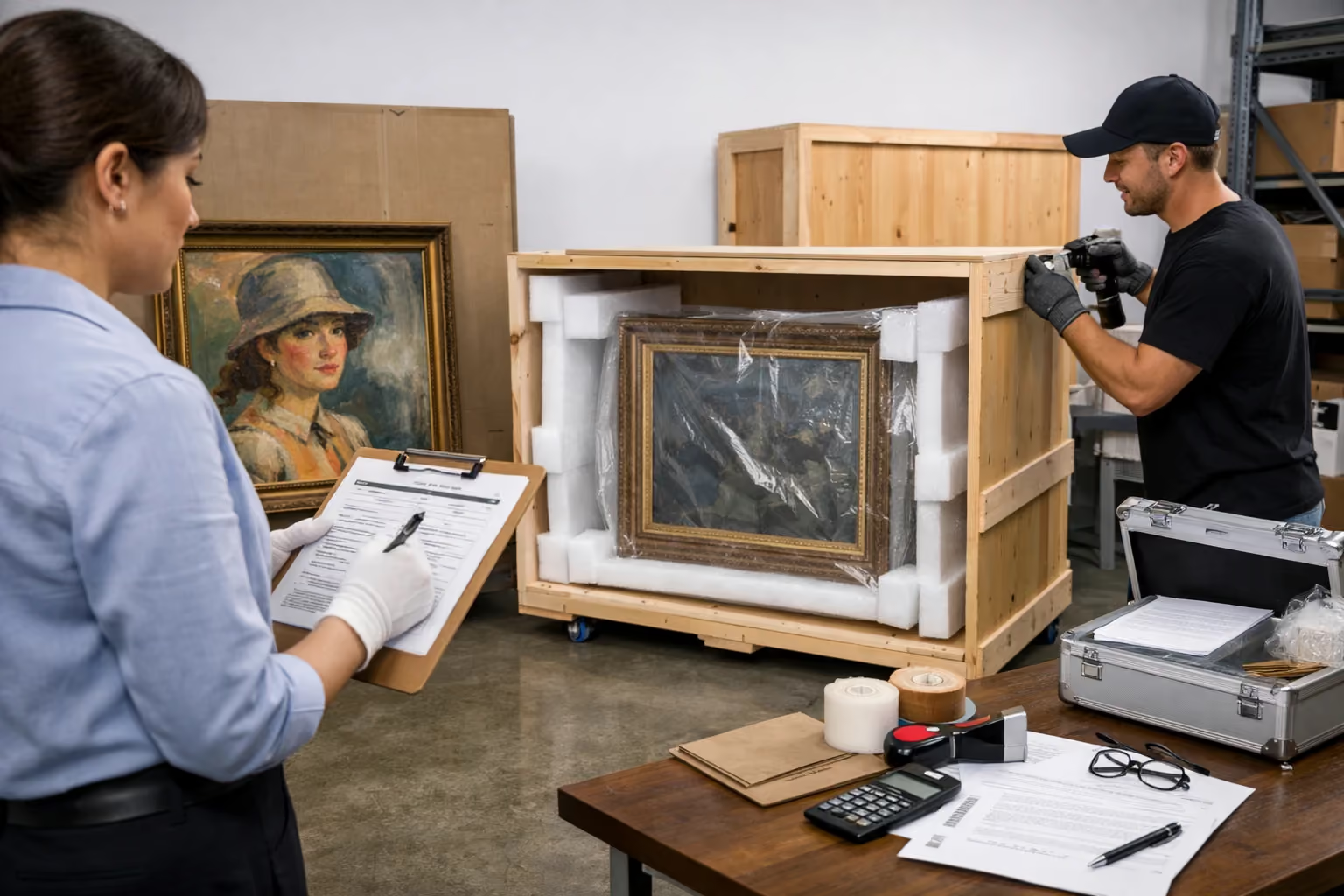

When you’re sending parcels, freight, or any other goods within your own country, the paperwork might feel like a headache, but getting it right is critical. According to the Bureau of Transportation Statistics, in 2023, the U.S. transportation network handled roughly 55.5 million tons of freight daily, worth more than $51.2 billion, while the Freight Analysis Framework estimates tonnage will increase at about 1.2 percent per year between 2024 and 2050.
This massive volume underlines how essential smooth logistics operations are, and why knowing the documents required for domestic shipping isn’t just red tape, but a business necessity. We'll walk you through the most important shipping documentation for domestic freight, explain why each is needed, and give practical advice. By the time you’re done, you’ll feel confident you’re covering all your bases and minimizing your risk, delays, and costs.
Quick Recap: What Is Domestic Shipping?

“Domestic shipping”, also known as “intrastate shipping”, refers to the transport of goods within the borders of a single country. In the U.S., that means cargo carried by ground, rail, or air between states or cities.
Domestic shipping differs from international shipments (“interstate shiping”), which cross borders and typically involve customs declarations, import/export documents, tariffs and duties of both the exporting and importing countries, and more complex compliance requirements. These costs and rules are separate from the shipping costs and are managed by government agencies.
Because domestic freight doesn’t involve customs, the documents required for domestic shipping are usually simpler, but still critical. Whether you're a small business sending packages or a larger shipper moving full truckloads, missing or incorrect paperwork can lead to freight holdups, compliance fines, or even rejected loads.
5 Core Documents Required for Domestic Shipping
Here are the top essential shipping documents you need when arranging domestic freight:
1.Shipping Label
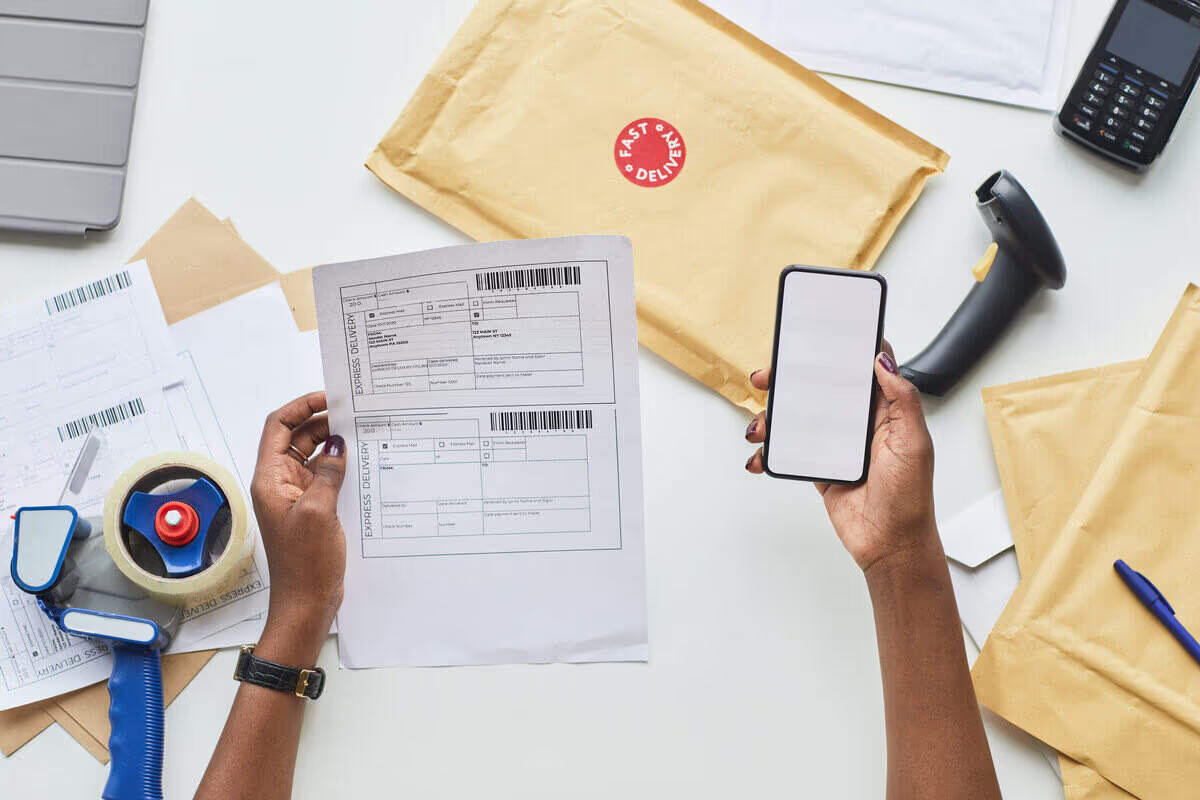
This is often the first and most visible piece of shipping documentation. The shipping label goes on your shipping box and includes:
- Sender’s name and shipping address
- Recipient’s name and shipping address
- A tracking number (barcode)
- The shipping method (e.g., ground, express, LTL)
- Sometimes declared value or additional service options
The shipping label makes sure your package gets scanned, tracked, and delivered by the package carrier, whether that’s UPS, FedEx, USPS, or another shipping company like UNIVAL Logistics.
2.Packing List / Packing Slip
A packing list for shipment (also called a packing slip) is an itemized inventory of everything in the package. It details:
- Each item’s description
- Quantity
- Weight (often)
This document helps in numerous ways: when verifying contents at a distribution center, during audits, or in the event of damage or loss, and also allows the recipient to confirm their order is accurate upon arrival. For freight shipments, the packing slip is indispensable in reconciling what was supposed to go versus what actually arrived.
3.Commercial Invoice
Although “invoice” sounds like just a billing tool, a commercial invoice plays a critical role in domestic freight, too. It lists:
- The goods being shipped
- Their value
- Terms of sale
This document supports the declared value of the goods, which may influence insurance, liability, and claims processes. A commercial invoice is typically not required for domestic shipments, as its primary purpose is to facilitate customs clearance, duties, and taxes in international trade.
For domestic shipments within the same country, a standard sales or packing list is usually sufficient to document the transaction and request payment. However, even in domestic shipments, carriers may ask for a commercial invoice if there’s significant value or regulatory risk.
4.Bill of Lading (BOL) / Air Waybill
For larger freight (especially domestic freight shipping), the Bill of Lading (BOL) is your cornerstone. It serves multiple roles:
- A receipt – confirming the carrier received your goods.
- A contract – laying out terms between the shipper and carrier.
- A title document – particularly for goods in transit, showing who legally owns them.
It also includes essential information such as the names of the shipper and the consignee, the point of origin and destination, a detailed description of the goods, the quantity and weight of the goods, and any special instructions or handling requirements.
It also contains information about the shipping freight charges and the terms and conditions of carriage. A carrier's representative must sign it as a confirmation of acceptance of the shipment. Getting your BOL right is huge. Mistakes can lead to delivery delays or disputes over liability. For domestic air freight, an air waybill acts like a BOL but for the air transport shipping method.
Proof of Delivery (POD)

A Proof of Delivery (POD) is a signed acknowledgment showing the consignee received the goods. It's critical for closing out your transaction and for claims, if something goes wrong. It usually includes the names of the shipper, consignee, and carrier, the date and time when goods were received, and a signature from the recipient confirming receipt. It also serves as proof of delivery in case of any disputes or errors and can be used for accounting purposes, such as billing or payment reconciliation.
Other Documents for Domestic Shipping: Additional Paperwork to Keep in Mind
Beyond the essential documents required for domestic shipping, there are some additional documents you may need depending on your shipment:
Freight Bill
This is the invoice from the carrier for transporting your cargo. It details shipping costs, terms, and any additional fees, and is used to request payment from the shipper or the responsible party for the transportation services provided.
Restricted Goods Documentation
Shipments containing hazardous materials or dangerous goods (e.g., some aerosols, flammable liquids, or certain chemicals) require specific documentation and must adhere to strict handling guidelines set by agencies like the Department of Transportation (DOT) and Customs and Border Protection.
Depending on your shipment, you may need special permits, safety data sheets (SDS), or compliance forms confirming that you’ve identified and declared them per the relevant rules. For some items, you may need to obtain specific permits or licenses from the relevant federal agency before shipping, such as permits for firearms, certain food items, and animal products.
You can find specific information in DOT's guide on preparing shipping papers according to HAZMAT transportation requirements.
Insurance Certificate
If you choose to insure your cargo, the insurance certificate is your written proof that the shipment is protected while it moves through the carrier’s network. For domestic shipments, the certificate spells out exactly what is covered, at what value, and under what conditions. This matters because most shipping carriers offer limited liability. More on this below.
Certificate of Origin (CO)
The CO is mostly used for international shipments to determine duties or to qualify for preferential trade tariffs in international trade, but in rare cases, a domestic Certificate of Origin can be required for specific reasons, such as contractual obligations, proof of origin for certain government programs, or to meet the requirements of a regional free trade agreement within your own country.
For example, in the United States, a domestic Certificate of Origin might be needed to show that a product qualifies for preferential tariff rates under a trade agreement like the USMCA.
HS / Harmonized System Code Documentation
While HS codes are used in international trade and are generally not mandatory among the basic domestic shipping paperwork, shippers sometimes track them internally for classification, reporting, or compliance purposes.
Why These Documents Matter: Benefits Beyond Just Compliance
You might think paperwork is just bureaucracy, but these shipping documents help drive efficient logistics operations:
- Accuracy reduces cost: Having a detailed packing list means fewer errors, fewer missing items, and fewer claims.
- Faster delivery: Correct shipping labels and BOLs streamline handoffs between shipping carriers, reducing delays.
- Liability management: Proper documentation (BOL, invoice) defines responsibility and ownership, so if something goes wrong, you’re covered.
- Regulatory compliance: For dangerous goods, failing to include the proper documentation may result in fines or seizure.
- Insurance leverage: A full-value shipping insurance helps you get higher coverage and smoother claims.
- Audit trail: Documents create a paper trail for your supply chain, helpful for audits, accounting, or dispute resolution.
Tips for Smoother Paperwork Handling
Handling all the domestic shipping documents doesn’t have to feel chaotic. A few simple systems can save time, reduce mistakes, and keep your freight moving without hiccups. Whether you run a warehouse, an e-commerce shop, or a small shipping department, tightening up your paperwork process gives you fewer delays, fewer claims, and far less back-and-forth with carriers.
- Standardize your paperwork: Use templates for your BOL, packing list, and commercial invoice to reduce human error.
- Train your team: Everyone involved—warehouse, shipping, customer service—should know what each document is and why it matters.
- Leverage software: Modern TMS (transportation management systems) or shipping platforms can auto-generate many of these shipping documents for you, even tying in your declared value program.
- Work with your carrier: Understand your package carrier’s documentation requirements; each shipping company may have slightly different rules.
- Review your insurance: Make sure your declared value matches your real risk, and that coverage limits are realistic for your shipments.
Why Full-Value Insurance Matters Even for Domestic Shipments
Even for shorter, domestic shipments, things can still go wrong. Trucks crash, packages can get damaged, lost, or even stolen. That’s where insurance comes in, and not just any policy, but full-value shipping insurance. Most carriers offer limited liability, and payouts are based on weight, not the goods' true value. If something goes sideways, you could end up with a settlement that barely covers a fraction of your cost.
For businesses moving high-value items through domestic shipping channels, full-value insurance protects your cash flow, your customer relationships, and your delivery promises. It also helps resolve disputes faster, since everything about your coverage is already documented and easy to verify, so you can ship with confidence, knowing you are covered from the moment your package leaves your door until it reaches its destination.
Besides having all the documents required for domestic shipping prepared, using secure and insured shipping services, such as those offered by UNIVAL, is the last piece of the logistics puzzle for complete peace of mind. Here's why:
- Full-value coverage: UNIVAL offers up to $150,000 in domestic shipping insurance, providing robust protection for valuable freight against damage from fire, breakage, weather, theft, and even hazardous materials incidents.
- Risk management: Our policies let you declare the value you want, instead of being forced into a fixed or limited program.
- Quick payouts and transparent billing: Claims are handled swiftly, and the invoicing is simple and clear.
- Experienced handlers: UNIVAL uses trained specialists, reducing handling risk.
Secure shipping and intelligent, insured logistics solutions are your safety net - a seatbelt for every package on the road, whether it's headed interstate or across borders.
Ship Domestically with Complete Confidence
The documents required for domestic shipping discussed above are ones that every shipper—big or small—needs to master. Neglecting any of these can lead to delays, unnecessary shipping costs, or even regulatory headaches. On the flip side, getting your shipping documentation right helps streamline your domestic freight, reduce risk, and ensure reliable service.
And when it comes to protecting your domestic shipment, don’t skip out on a reliable carrier and strong insurance, either. With a logistics partner like UNIVAL Logistics in your corner, you get tailored policies, full-value coverage, 24/7 tracking, API integration, and peace of mind, especially for high-value or sensitive items.
So, next time you're packing up a load or scheduling a domestic shipment, take a few extra minutes to make sure your paperwork is flawless. It’ll save time, money, and stress down the road, and that’s the kind of intelligent logistics that really delivers.