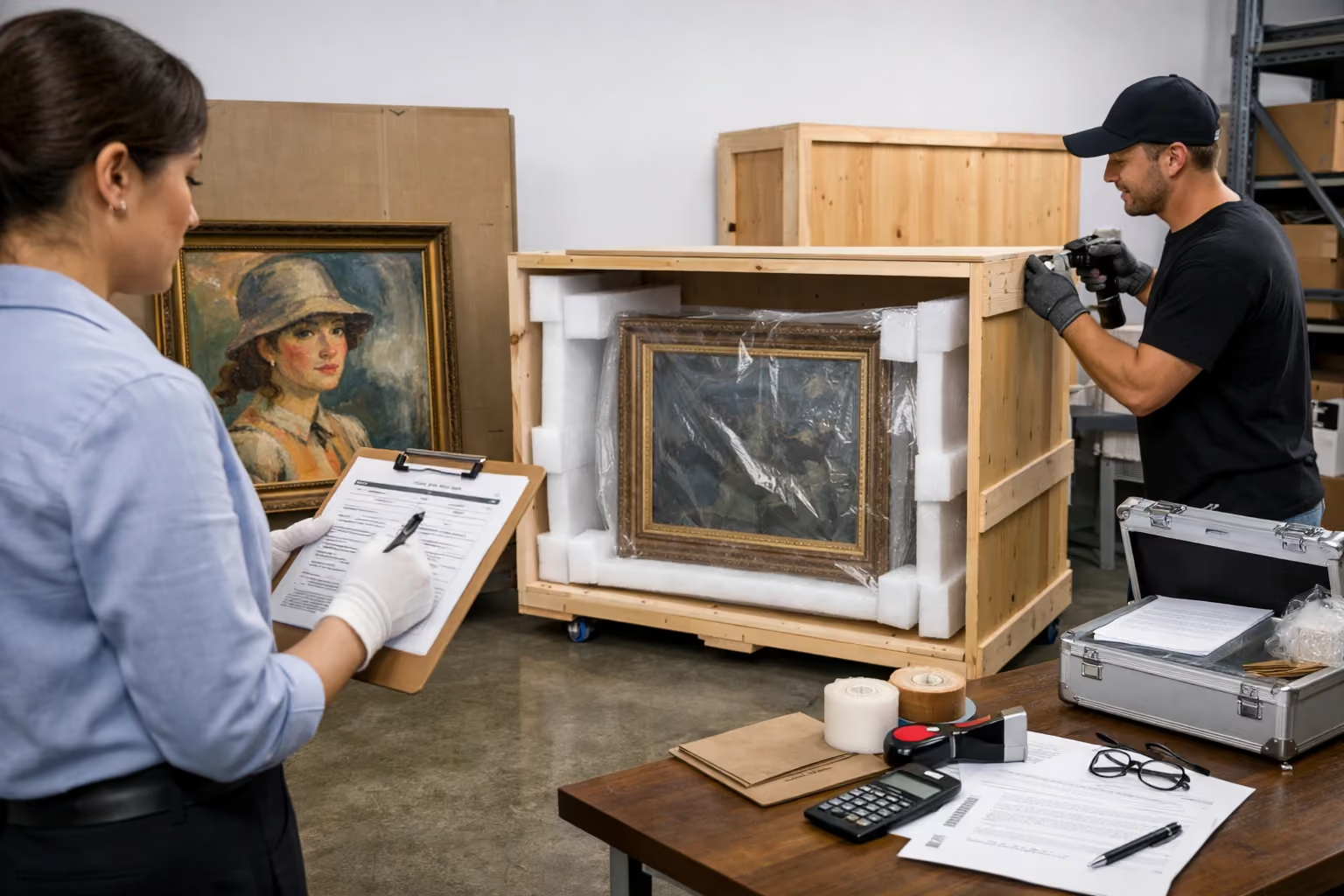

Fine art can crack, scuff or break in transit. Learn how condition reports, wrapping, crates and climate care protect a work, and how full-value insurance covers what a carrier label does not.
- Condition reports and photographs
- Wrapping, cushioning and crates
- Humidity and temperature in transit
- Declared value and full-value insurance
Who Needs to Know How to Ship Fine Art?
Anyone who sends a work that cannot be replaced benefits from a clear method.
Private collectors and estates
Selling, lending or settling an estate means sending pieces that cannot be replaced. A clear method protects the work and your claim.
Galleries and dealers
Works move to clients, fairs and storage all year. A consistent routine keeps each handover clear.
Artists and studios
Finished work often leaves in a single box. Good preparation protects months of effort.
Auction houses and consignors
Consigned lots pass through several hands. Condition records show where any change happened.
Interior designers and art advisors
Works travel between showrooms, studios and client homes. Documented condition keeps each move accountable.
How to Ship Fine Art - Step by Step
Follow this order. The first two steps also protect your position if you ever need to make a claim.
Step 1: Document the work
Photograph the front, back, frame, signature and any damage, then write a condition report. Gather the invoice or appraisal.
Step 2: Check that the work is stable
Confirm that the frame is sound and the surface is secure. If paint is flaking, ask a conservator first.
Step 3: Wrap the work
Wrap it in clean plastic sheet with rigid board over the front, add bubble wrap or foam, and tape every edge.
Step 4: Box or crate it
Place the wrapped work in a box or crate with cushioning on every side. Large or exceptionally fragile works may need a purpose-built crate.
Step 5: Declare the value and insure it
Declare the full, accurate value and arrange full-value insurance. A carrier's declared value is a limit of liability, not insurance.
Step 6: Ship, track and inspect
Track the shipment. On arrival, let the work acclimate, then compare it with your condition report and note any damage before signing.
What Can Go Wrong When Fine Art Travels
Transit exposes a work to forces it rarely meets on a wall. This table summarizes hazards described by the Canadian Conservation Institute (CCI), checked in October 2026.
| Hazard | What CCI says | Protection |
|---|---|---|
| Drops and shock | For parcel post, anticipate drops of up to 2 m (6.5 ft) | Cushioning at least 2 in. (50 mm) thick |
| Movement in the package | The work and its package must be restrained | Fill empty space so nothing shifts |
| Humidity change | Paint can crack or flake, and wood may split | Moisture-sealed packaging |
| Temperature change | Typical packaging protects against sudden changes for 30 minutes to several hours | Thermal insulation or temperature-controlled transport |
| Condensation and water | Packages can develop condensation from uneven temperatures | Seal the package against moisture and water |
| Glass breakage | For large glazing, consider laminated glass or acrylic | Low-tack tape on glass and board over the front |
These are general guidelines. Ask a conservator about fragile or valuable pieces.
Condition Reports: What to Record Before You Ship
CCI defines a condition report as a written or electronic record of a painting and its frame, based on close examination and used with photographs. It documents condition at a given time, so later changes can be traced.
CCI says condition records are needed before, during and after travel, and that they support insurance claims. A strong report records:
- Identification. Which work it is, why it was examined, the date and the examiner's name.
- Distinct features. CCI lists cracks, scratches, discolouration and old paint loss. Record the frame too.
- Photographs. CCI calls photographs an invaluable addition. Date them, credit the photographer and note the lighting used.
- Consistent wording. CCI says standardized terminology is critical. Use the same terms before and after the journey.
How to Wrap and Pack Fine Art
Wrapping sits next to the work, and cushioning sits outside the wrap. CCI's guidance on wrapping a painting describes these layers and habits:
- Plastic and board. A clean, uncoated polyethylene sheet is wrapped fairly tightly around the work, with rigid cardboard cut to cover the front of the frame. All edges are taped.
- Padding. An outer layer of bubble wrap or thin closed-cell foam is taped in place.
- Cushioning. As a general guide, CCI says cushioning should be at least 2 in. (50 mm) thick.
- Corners and glass. Fit cushioned covers over fragile frame corners. CCI suggests low-tack tape on glass, notes that research found similar damage with or without tape, and says to remove it gently after travel.
- Labels. Mark the front and back of the wrapping and include unpacking instructions.
- Handling. CCI says never to carry a painting by its hanging wire or the top of its frame, and to use at least two people for easel-sized works.
Prints and works on paper need different packing. See our insured fine art shipping page for notes by type of work.
When Fine Art Needs a Crate
A crate is a rigid outer container built around a packed work. There is no single rule for when to use one. CCI starts from the object and the journey: its weight, structure and condition, and the carrier network.
CCI lists corrugated mirror boxes, channel crates and plywood crates built to ASTM D6251 among the options. CCI and the U.S. National Park Service (NPS) describe these features of a good crate:
- Solid panels. CCI gives 12 mm (1/2 in.) as a typical minimum panel thickness in museum practice.
- Screws, not nails. NPS says to fasten the lid with screws, because nails cause vibration stress and can injure the person unpacking.
- Room for cushioning. NPS sizes the crate interior at the object box plus two to three inches on all sides.
- Discreet labels. CCI cites screw or latch closures and advises against marking a crate as art.
- An inventory inside. NPS says to attach the inventory and unpacking instructions under the lid.
Wood crates sent abroad face a rule of their own. CCI says wood packaging thicker than 6 mm (1/4 in.) for international shipment is subject to pest regulations. For international travel frames, CCI suggests plywood to avoid pest-treatment issues with solid wood.
Very large, oversized or exceptionally fragile works may need specialist crating or handling. Contact us before you ship, and we will confirm what is possible for your piece.
Climate, Humidity and Temperature in Transit
Climate damage may not show until after delivery. CCI says paint layers can crack, delaminate or flake when humidity changes, and that a swing to lower humidity is much higher risk to paintings than a swing to higher humidity. It also describes these effects:
- Wood. Wood and wood assemblies may crack, split, delaminate or distort permanently, which matters for wooden frames and panel supports.
- Damp. CCI defines damp as over 75% relative humidity, and mould risk rises as humidity rises.
- Temperature. For temperature-controlled transport, CCI gives the standard specification as 15 to 25 degrees Celsius (59 to 77 degrees Fahrenheit).
- Condensation. Packages can develop condensation from uneven temperatures, whether in a room, truck or airplane.
On arrival, let the work acclimate before you open it. The NPS shipping checklist tells recipients to prepare a secure area where the object can acclimate before unpacking, and to inspect the crate and packing materials on arrival.
If your work is sensitive to temperature or humidity, tell us when you request a quote. We will confirm what is possible for your route before anything ships.
Insurance and Declared Value for Fine Art
Carriers publish their own limits for artwork. FedEx says declared value is the maximum it can be liable for and is not shipping insurance, and that its liability will not exceed the repair cost, depreciated value or replacement cost, whichever is less.
FedEx's artwork page recommends shipping artwork with a maximum declared value and limit of liability of no greater than $1,000, and offers Premium Art Boxes for artwork valued over $500. FedEx also states that if a shipment is improperly packed and then damaged, it will not be deemed at fault.
Under carrier terms alone, any value above the limit is the owner's risk. Full-value insurance with Unival covers the declared value of the shipment, up to $150,000. Our quote form asks for the insurance amount, so have your value and its proof ready. What supports a declared value:
- Proof of value. An invoice, appraisal or provenance record.
- A dated condition record. Photographs and a condition report show the state of the work before it left.
- Packing that follows good practice. FedEx ties reimbursement to proper packing.
For how cover is priced, see shipping insurance cost and our carrier insurance comparison.
Pickup, Delivery and Inspection With Unival
Our arts and collectibles page describes a chain of custody built for high-value goods. Each piece is verified, photographed and packaged at pickup, its condition is documented before it leaves the owner's hands, and tracking is updated at every checkpoint. Delivery is confirmed and documented on arrival.
Collection is arranged when you request a quote, and the recipient signs for the work. When it arrives:
- Check the packaging for damage before opening it, and photograph it.
- Let the work acclimate if it travelled through a different climate.
- Compare the work with your condition report and photographs.
- Note any damage on the delivery receipt before signing.
- Keep all packaging and records, and contact us right away.
Common Mistakes When Shipping Fine Art
Avoid these habits:
- Relying on the carrier label. Declared value is a limit of liability, not insurance.
- Skipping the condition report. Without a record from before the journey, there is nothing to compare on arrival.
- Letting the work shift. Fill empty space and restrain the work inside the package.
- Opening straight away after a climate change. Let the work acclimate first.
- Sending an oversized work as a standard parcel. Contact us before you ship.
Ship Fine Art With Unival
Unival ships paintings, sculpture and rare collectibles for galleries, collectors and auction houses, within the US and abroad, with full-value insurance up to $150,000 and tracking from pickup to signature.
Send the work's size, weight, declared value, pickup location and destination, and we will confirm the coverage and price before anything ships. More detail is on these pages:
- Overview: insured fine art shipping and insured high-value shipping.
- Highest-value works: secure transport services.
- Pricing by size: our guide to dimensional weight.
- Local detail: Los Angeles, New York, Miami and Boston.
- After pickup: track your shipment.
FedEx and Premium Art Box are trademarks of their owner. They are named here to identify the carrier and service described, as checked in October 2026. Museum guidance comes from published notes by the Canadian Conservation Institute, the U.S. National Park Service and the American Museum of Natural History, checked in October 2026. This page does not imply endorsement by any of them and is not conservation advice.
Key takeaway
Document the work, wrap it so nothing can move and declare its full value. A carrier's declared value is not insurance. Get a quote for your next fine art shipment.
Frequently Asked Questions
How do you ship fine art safely?
Document the work, wrap it in clean plastic sheet, rigid board and padding, and box or crate it with cushioning on every side. Insure it for its full value and inspect it on arrival.
Do I need a crate to ship artwork?
Not always. Many framed works can travel in a well-padded box. Large or exceptionally fragile works may need a purpose-built crate, so contact us before you ship.
What is a condition report?
It is a written record of a work and its frame, based on close examination and used with dated photographs. It documents condition at a given time.
Does fine art need climate-controlled shipping?
It depends on the work. CCI says humidity swings can crack paint and distort wood, and that typical packaging protects against sudden temperature changes for only 30 minutes to several hours. If your work is sensitive, tell us when you request a quote.
How much insurance can I get on artwork?
Unival insures shipments for their full declared value, up to $150,000. If your work is worth more, contact us before you ship.
Is FedEx declared value enough for artwork?
FedEx recommends artwork with a limit of liability of no greater than $1,000 and says declared value is not insurance. Full-value insurance covers the declared value of the shipment itself.
Should I wait before unpacking a work that has travelled?
Yes, if the climate changed. NPS guidance calls for a secure area where the work can acclimate before unpacking. Photograph the packaging first and note any damage before you sign.
Can I ship fine art internationally?
Yes. International shipments need customs paperwork that matches the declared value, and some countries restrict the export of antiques. See our insured fine art shipping page.
How do I get a quote to ship fine art?
Send the work's size, declared value, pickup location and destination through the quote form, and we will confirm the coverage and price before anything ships.