
Declared Value Is Not Insurance
FedEx states plainly that declared value is not shipping insurance. It is the maximum amount FedEx can be liable for if a package is lost, damaged, delayed or misdelivered, and you choose it when you create the shipment. You must prove any actual loss, and you carry the risk of anything above the declared value.
The first $100 of declared value is included in the shipping rate, and fees apply only to the amount above that. FedEx's rate calculator and Service Guide show the current charge.
Insurance is a different thing. A separate policy can cover the value of the shipment, and full-value insurance with Unival covers the declared value, up to $150,000.
The Default Limit for Jewelry
For jewelry, FedEx publishes a lower maximum than for ordinary goods. Its jewelry page states that rings, necklaces, watches, gemstones and other precious-metal jewelry can be declared at up to $1,000 per package.
FedEx's declared value terms add that declared values above the maximum for a category such as jewelry are null and void. Writing a larger number on the label does not raise the limit.
The same jewelry page says FedEx does not provide insurance for loss or damage, and that any value beyond the limit is the shipper's responsibility.
What the FedEx Declared Value Advantage Program Allows
Eligible shippers can apply to FedEx's Declared Value Advantage program to declare more. According to FedEx, the program allows up to $100,000 per domestic shipment and up to $25,000 to select international destinations for jewelry, watches, watch movements and jewelry components such as precious stones and metals. Coins and gold bars are excluded.
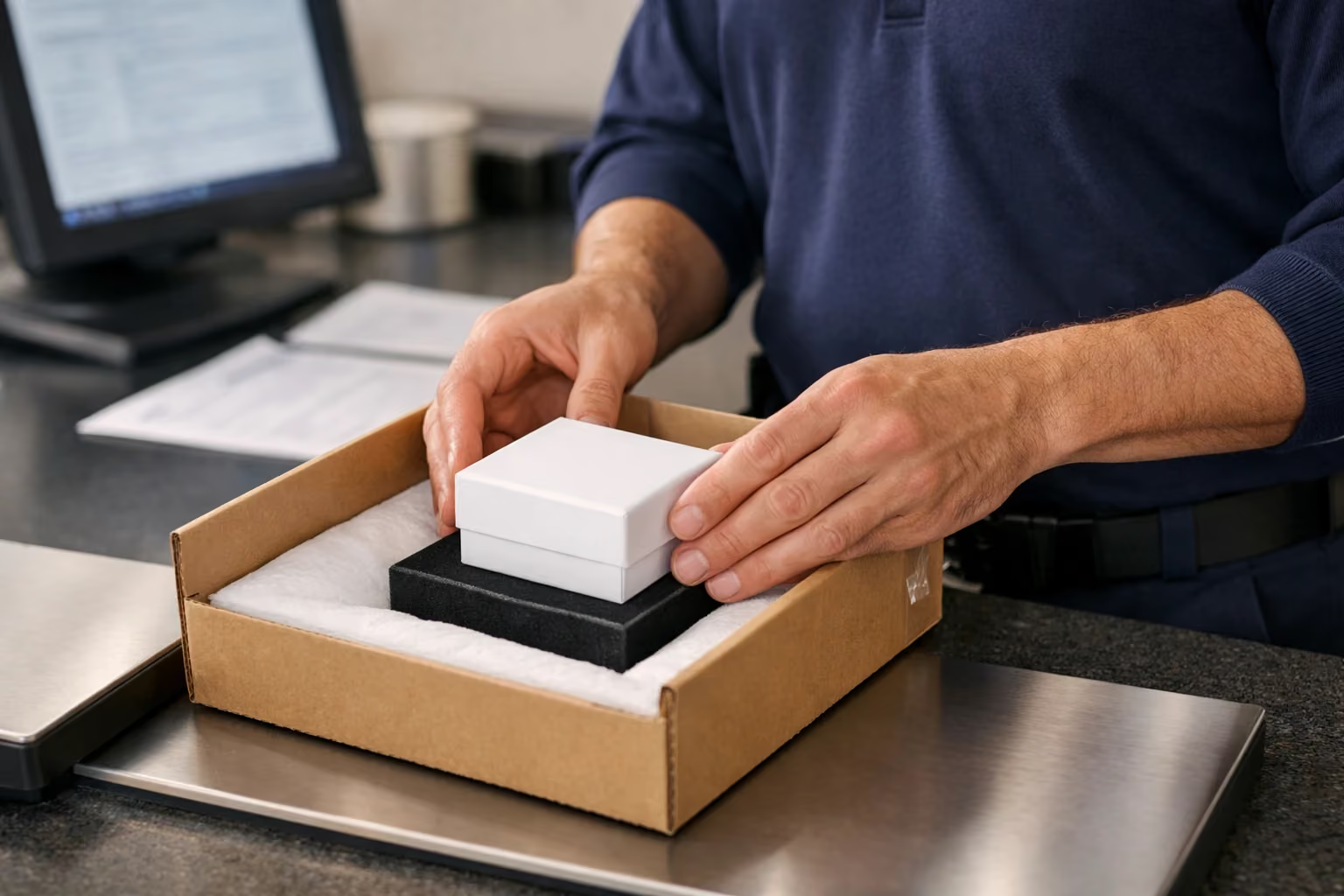
Enrollment is required for items above the standard limit, and you apply through FedEx. Enrolled customers can also get a free Security Box Kit, which suspends jewelry inside a medium or large FedEx box.
The program raises the amount you can declare, but the other terms still apply. Liability stays limited to the lesser of repair cost, depreciated value or replacement cost, and a claim depends on proof and proper packing.
FedEx Declared Value and Insurance Compared
The table sets out how declared value differs from a separate insurance policy. The FedEx column was checked against FedEx's published pages in October 2026, and FedEx can change its terms at any time.
| Feature | FedEx declared value | Full-value insurance |
|---|---|---|
| What it is | A limit on FedEx's liability | A separate contract with its own terms |
| Jewelry limit | $1,000 per package, or up to $100,000 domestic for enrolled shippers | Covers the declared value, up to $150,000 with Unival |
| Claim basis | Proof of loss, proof FedEx is at fault and proper packing | Set by the policy terms |
| Above the limit | The shipper's responsibility | Can cover the difference, subject to the policy |
What a Declared Value Claim Involves
FedEx's declared value terms set out what a claim needs. The claim is filed in writing with proof of the loss or damage and proof that FedEx is at fault. Reimbursement also requires that the shipment was properly packed, and if the packing was improper, FedEx will not be deemed at fault.
Even then, FedEx's liability is the lesser of the repair cost, depreciated value or replacement cost, regardless of the value declared. That can come out below the price you paid or the price you sold the piece for.
What This Means for Your Jewelry Shipment
Take a ring worth $20,000. At the standard limit of $1,000 per package, a loss leaves $19,000 uncovered. If your account is enrolled in the program, you could declare more for a domestic shipment, but the claim would still depend on FedEx's terms, proof and packing.
Insurance is designed to close that gap. For a side-by-side look at how the major carriers treat valuables, see our carrier insurance comparison.
Packing and Item Rules That Affect a Claim
FedEx's published pages set several rules that can affect whether a jewelry claim is paid:
- Use sturdy corrugated packaging. Jewelry valued over $500 cannot be shipped in a padded envelope.
- Pack the item so it cannot move, because improper packing can defeat a claim.
- Direct Signature Required is applied automatically at no extra charge for a declared value of $500 or more to or within the U.S. and to Canada.
- Coins and gold bars are excluded from the Declared Value Advantage program.
- Cash and currency cannot carry a declared value and are not reimbursed if lost or damaged.
- Keep photographs of the item and its packing, the invoice or appraisal and the tracking number, because a claim requires proof.
Where Unival Fits In
Unival specializes in shipments worth more than a carrier will pay for. Full-value insurance covers the declared value of the shipment up to $150,000, secure transportation is arranged for high-value goods, and every shipment is quoted before it moves, so you know the coverage and the price in advance.
See our guides to insured jewelry shipping, insured watch shipping and high-value parcel shipping, our overview of insured high-value shipping, and our pages on shipping insurance cost and secure transport services.
FedEx is a trademark of its owner. This page describes FedEx's published terms as checked in October 2026, for information only. It is not an official FedEx document or legal advice, so confirm the current terms before you ship.