
The Registered Mail and Insured Mail Limits
Postal insurance is included in the Registered Mail fee, up to a maximum insured value of $50,000. USPS states that an article worth more than $50,000 is charged a flat fee that covers no more than $50,000, so the ceiling does not rise with the value you declare. USPS describes Registered Mail as the most secure service it offers.
Insured Mail is the lower tier. USPS states that you can buy insurance for up to $5,000 in indemnity. Priority Mail, Priority Mail Express and USPS Ground Advantage include up to $100 of insurance in the price, and more can be added up to the $5,000 maximum.
USPS also notes that there are limitations on insuring some products and certain items, so check the current rules for your contents before you mail.
Packaging and Mailing Rules for Registered Mail
USPS's standards for Registered Mail set several conditions that can decide whether an item is accepted or paid:
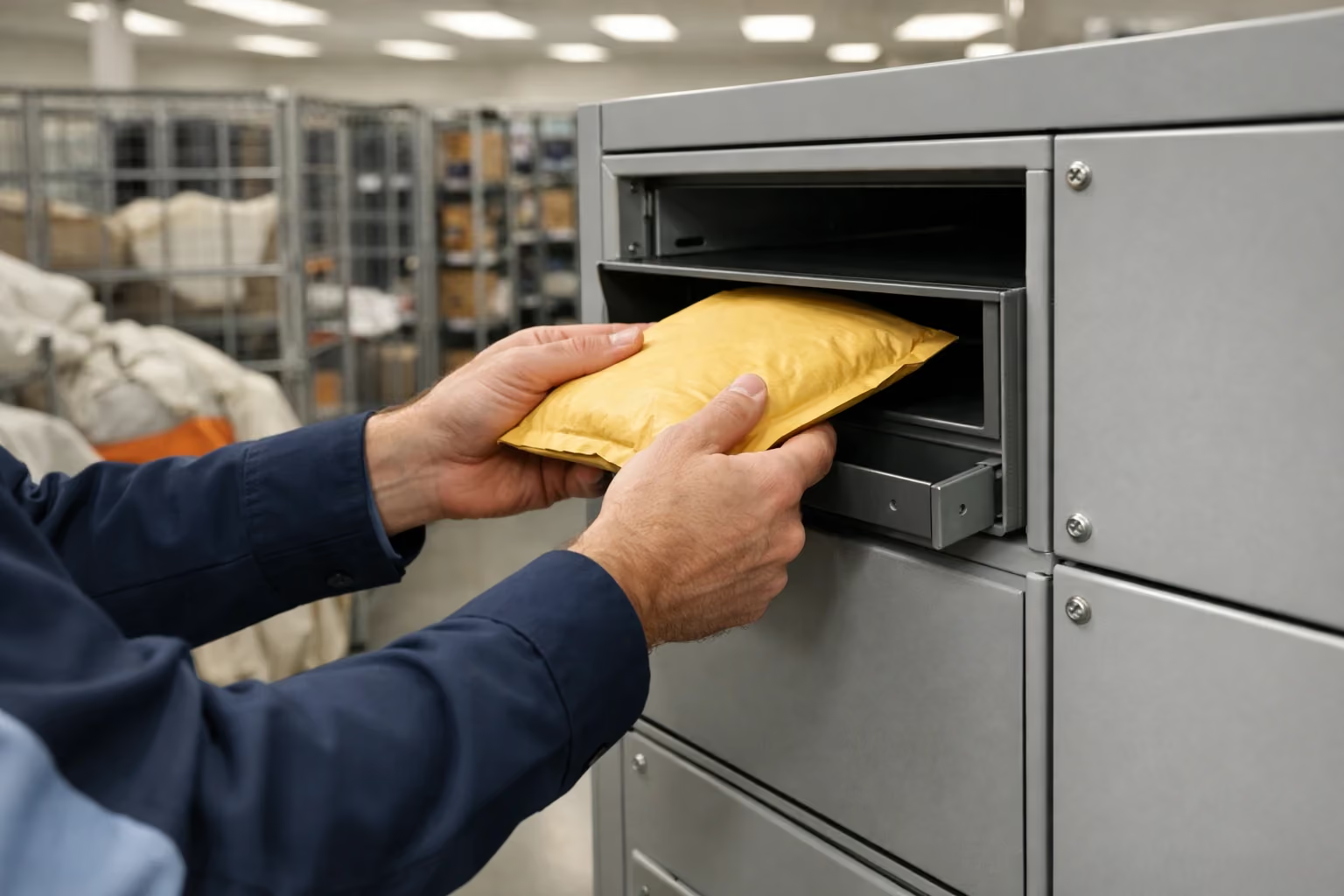
- Registration may not be obtained for items presented in a padded envelope, a Tyvek-style envelope, a plastic envelope or a glossy-coated paper envelope.
- Items must be packed to withstand normal handling, and indemnity may be denied for improper packaging.
- Tape and seals must visibly damage the envelope or wrapper if removed, and USPS employees may not help prepare or seal the mail.
- The mailer must always declare the full value, and no indemnity is paid for matter registered without prepayment of postage and fees.
- The service is only available at a Post Office counter or through a rural carrier at the time of mailing.
Cash, Coins and Currency
USPS treats coins, Federal Reserve notes and other bank notes as currency, which is mailable under any class of mail except where its standards prohibit it.
Standard insurance on currency is very limited. USPS's standards set a maximum indemnity of $15 for currency that is not sent by Registered Mail, with exceptions for philatelic and numismatic items. Registered Mail can carry insurance at the declared value, up to the $50,000 maximum.
USPS also requires commercial cash transactions over $500 to be sent by Registered Mail, and its expedited packaging supplies must not be used for them, whatever the amount. For larger cash movements, see our guide to cash-in-transit services.
International Registered Mail and Valuables
The domestic limit does not carry over. From January 1, 2026, USPS limits International Registered Mail to letter-post items containing documents only, ends it as an extra service for First-Class Package International Service, and sets the maximum indemnity at $40.20.
USPS's International Mail Manual lists coins, bank notes, gold, silver and platinum, precious stones, jewelry and watches as valuable articles that may be sent only with the services it names. Priority Mail Express International cannot be used for them, and individual countries may prohibit or restrict them. Exporting rough diamonds from the United States is prohibited unless they are controlled under the Kimberley Process.
Priority Mail International includes $200 of merchandise insurance, and optional cover can be bought up to $5,000 for certain countries, subject to each country's maximum. Check the current rules for your destination before you ship.
What a USPS Insurance Claim Requires
USPS's claim standards set firm windows. For damaged items or missing contents, file immediately and no later than 60 days from the date of mailing. For a lost Registered Mail or Insured Mail item, the claim cannot be filed until 15 days after mailing and must be filed within 60 days.
The mailer or addressee can file for damage or missing contents. For a lost article, the claimant needs the original retail mailing receipt or the qualifying online label record. The customer must keep evidence of the service purchased until the claim is resolved, and must provide acceptable proof of cost or value, such as a sales receipt, a paid invoice or a credit card statement. For collectible items, USPS asks for a sales receipt, a paid invoice, a bill of sale or a statement of value from a reputable dealer.
Payment is not automatic. USPS depreciates used articles that are lost or damaged based on life expectancy, and claims are not payable for consequential loss, sentimental value or the cost of estimates and appraisals, or when evidence of insurance is not provided.
What This Means for Your Shipment
Take a piece of jewelry worth $20,000 sent within the United States. Insured Mail tops out at $5,000, which leaves $15,000 uncovered. Registered Mail can insure a $20,000 article in full, but only if it is taken to a Post Office counter, packed in eligible packaging and handled within USPS's claim windows.
Above $50,000, the Registered Mail ceiling no longer rises, and sent abroad the maximum indemnity is $40.20. Registered Mail is also a counter service for one item at a time, with no scheduled pickup, which makes it hard to use for regular volume.
Separate full-value insurance is designed to cover the declared value of the shipment itself. For a side-by-side view of the major carriers, see our carrier insurance comparison.
USPS Registered Mail and Full-Value Insurance Compared
The table sets out how Registered Mail differs from a separate insurance policy. The USPS column was checked against USPS's published standards in October 2026, and USPS can change its terms at any time.
| Feature | USPS Registered Mail | Full-value insurance |
|---|---|---|
| Maximum cover | Up to $50,000 within the United States | Covers the declared value, up to $150,000 with Unival |
| How you send it | At a Post Office counter or through a rural carrier, with no scheduled pickup | Quoted before it moves, with pickup arranged when you request a quote |
| Packaging | No padded, plastic, Tyvek or glossy mailers | Set by the quote and the shipment |
| International | Documents only, with a $40.20 maximum indemnity | Set by the policy and your quote |
| Claim window | File within 60 days of mailing | Set by the policy terms |
Where Unival Fits In
Unival specializes in shipments worth more than a standard mail service will pay for. Full-value insurance covers the declared value of the shipment up to $150,000, secure transportation is arranged for high-value goods, and every shipment is quoted before it moves, so you know the coverage and the price in advance.
If your shipment is worth more than $150,000, contact us before you ship. See our guides to insured jewelry shipping, insured watch shipping and high-value parcel shipping, our overview of insured high-value shipping, and our pages on shipping insurance cost and secure transport services.
USPS and Registered Mail are trademarks of the United States Postal Service. This page describes USPS's published standards as checked in October 2026, for information only. It is not an official USPS document or legal advice, so confirm the current rules before you ship.